Look at any portal and New Toronto's freehold average lands somewhere around a million dollars. That number is arithmetically true and analytically useless. It is the mean of two housing cohorts that share a postal code and almost nothing else, and the friction that decides these deals doesn't sit anywhere on the listing page.
Start with the friction, not the price
New Toronto grew up around the factories that once lined Lake Shore Boulevard West, and its main street still carries traces of that small-town commercial character. That industrial past is the single most common source of surprise during due diligence on a house south of Birmingham Street or within a block or two of the old Goodyear and Continental Can footprints.
The friction shows up in three ways buyers rarely price in before they write an offer:
- Soil and fill history on lots close to former industrial parcels. Lenders and insurers occasionally ask for a Phase One Environmental Site Assessment on properties that abut or once housed light industrial uses. It is not automatic, it is not universal, and it is not something a standard home inspection will surface. When it does come up, it changes the closing timeline more than the price.
- The service stack under a 1940s bungalow. Original wartime houses in this pocket were built with 60-amp service, galvanized supply lines, cast iron drains, and in a fair number of cases, remnants of knob-and-tube in finished attics. Insurance underwriting has tightened around all four. A house that shows beautifully can still fail an insurer's binder check the week before closing.
- Narrow-lot setbacks and side-yard math. Most of the original New Toronto lots run about 25 feet wide. That geometry constrains any future addition, garden suite, or laneway build under Toronto's current zoning, and it is the reason two houses across the street from each other can carry very different long-term optionality even when they list within twenty thousand dollars of each other.
None of that is on the MLS description. All of it changes what you are actually buying.
Why the average blends two houses
The freehold stock in New Toronto is close to a fifty-fifty split between the original small-footprint housing put up between the late 1930s and the early 1950s and a growing wave of full teardown-and-rebuild infill.
The bungalow cohort typically sits at roughly 800 to 1,100 square feet above grade on a 25 by 120 lot, with a partially finished basement and a detached single-car garage off the lane. The infill cohort is the opposite in almost every dimension: 2,400 to 3,000 square feet across three levels, engineered foundation, full basement with a separate entrance already framed for a second suite, and current-code everything.
Averaged together, they produce a "typical" New Toronto freehold that does not exist. That is the number the portals report. It is also the number that quietly misleads buyers who assume they are looking at a bell curve rather than a barbell.
The useful question in New Toronto is not what the average is. It is which side of the average you are shopping on, and what the other side is doing to comps.
What roughly a million dollars actually buys here
The clearest way to see the split is to walk the same budget through both cohorts.
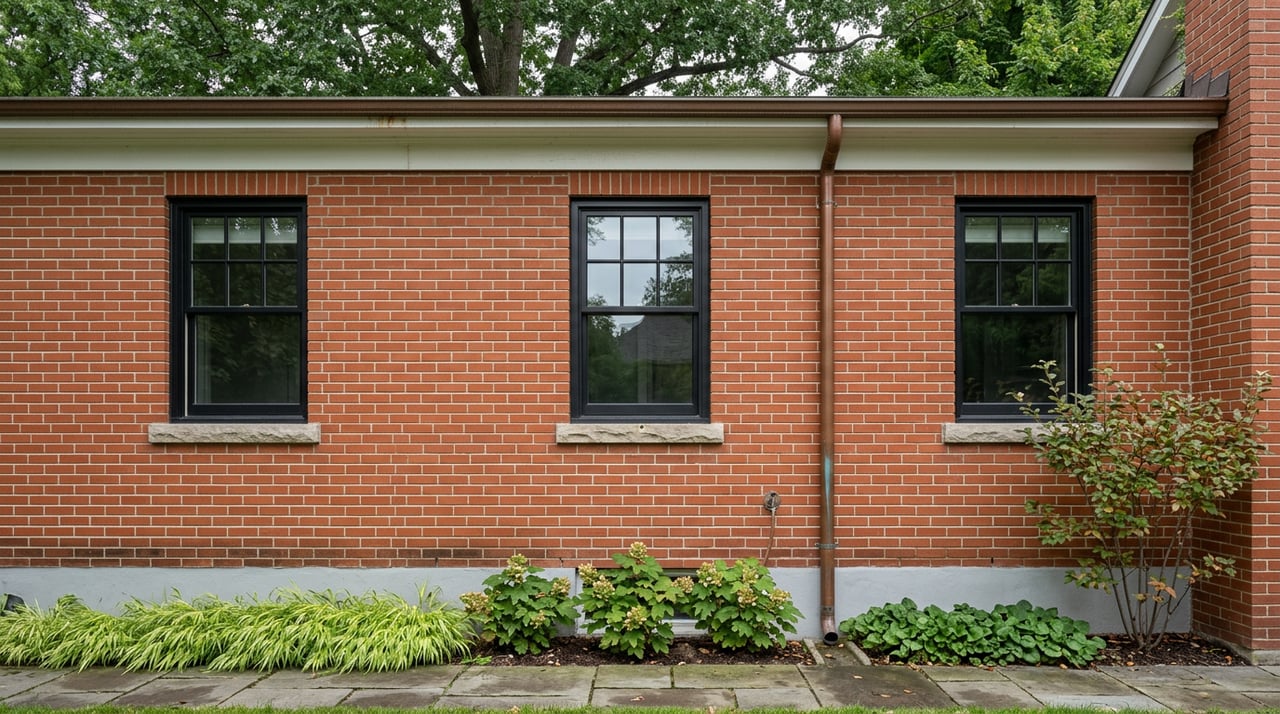
At the bungalow end, a budget in the low nine hundreds to just over a million usually gets you an original one-and-a-half-storey or bungalow on a 25 by 120 lot, largely untouched or lightly updated, with the service and envelope work still ahead of you. The value in that purchase is the land, the location inside a fifteen-minute walk of Colonel Samuel Smith Park and the 501 streetcar, and the optionality of a future rebuild.
At the infill end, the same budget rarely clears the entry. New three-storey builds on the same block routinely trade in the mid to high one-point-fours, and the ones that do come in under a million are almost always older townhouse-style semis or condo-townhomes on the interior streets.
The gap between those two experiences of "the New Toronto average" is where mispriced offers live. A buyer comparing New Toronto to Long Branch or Mimico on average price alone is comparing three different housing mixes, and the freehold cohort in New Toronto skews older and smaller than either of its neighbours.
What the June 2026 data is actually signaling
Zooming out helps only if you interpret what you are seeing. TRREB's June 2026 Market Watch reported 6,770 GTA sales, up 9.4 per cent year over year, on new listings down 12.9 per cent. The average GTA selling price was $1.06 million, still 3.9 per cent below June 2025, and the sales-to-list-price ratio held at 98 per cent.
For a New Toronto buyer, three things inside those numbers matter more than the headline:
- The city detached segment is firming faster than the average suggests. City of Toronto detached homes averaged $1.36 million in June 2026, up 0.4 per cent from May, with a median of $1.4 million. In a neighbourhood where the freehold stock is almost entirely detached and semi-detached, that is the comp set that should anchor your expectations, not the all-property mean.
- New listings across the GTA fell nearly 13 per cent year over year in June. In a small-inventory pocket like New Toronto, a citywide shortage translates into two or three fewer active listings on the streets you actually want, which is the difference between choosing between options and waiting a month.
- Semi-detached is the tightest segment in the 416. Elevate Realty's June 2026 read noted 416 semis selling at roughly 105 per cent of asking. New Toronto has a real semi-detached inventory in the interior blocks, and those homes are moving under different rules than the detached ones two streets over.
The story the data tells, translated into New Toronto terms: buyers have marginally more room to negotiate on tired bungalows than they did last spring, no room at all on refreshed semis, and a shrinking window on newly built infills as construction starts have slowed.
The mechanism most buyers get wrong
The mistake is treating New Toronto as an entry point to South Etobicoke because the average price looks approachable. In reality, the buyer who pays close to a million for an original bungalow is often making a longer, more capital-intensive commitment than the buyer paying $1.45 million for a finished infill next door, because the bungalow buyer is also signing up for the renovation, the servicing upgrade, and the timeline. That is not a worse deal. It is a different one.
The other mistake is assuming that everything within a fifteen-minute walk of the Lakeshore Village BIA carries the same environmental and servicing history. It does not. The blocks closer to Twenty Third Street and Lake Shore behave differently under due diligence than the streets tucked north toward Horner and the rail corridor, and a good inspection scope reflects that.
Short FAQ
Is a Phase One ESA standard in a New Toronto purchase? No. It is condition-driven. Lenders may request one when a property abuts or previously housed industrial use, or when a title search flags a historical use. A local agent who has closed in the pocket before will know which streets tend to trigger the request.
Are the wartime bungalows insurable as-is? Sometimes yes, often with conditions. Underwriters commonly require an electrical service upgrade to 100 amps and confirmation that any knob-and-tube has been removed. Getting a quote before you remove conditions is cheaper than negotiating the extension.
Does a 25-foot lot rule out a garden suite? Not automatically, but it tightens the design significantly. The side-yard setback math is the constraint. Two identical-looking lots can produce very different feasibility studies depending on where the existing dwelling actually sits within the lot lines.
How does New Toronto compare to Mimico or Long Branch for a first freehold? Different mixes, different mechanisms. Mimico leans condo-heavy, Long Branch's freehold market runs wider lots and higher entry prices, and New Toronto sits between the two on average but with the widest gap between the top and bottom of its own freehold range.
If you are working through what your budget actually buys on a specific New Toronto street, that conversation is worth having before you write an offer, not after inspection. EXIT Realty Trinity is happy to walk through the numbers, the block-by-block differences, and the questions your inspector should be asking. Contact Anna.